At PinSource, we’re the worldwide expert in lapel pins, but how did they evolve into a vehicle for identity and self-expression? Let’s dive into their rich history, which goes back centuries and across countries!
It’s unknown who actually created the first lapel pins, but we do know that a design process that’s often used in creating them, called “inlaying,” was invented by (as far as we know) the ancient Egyptians in 1800 BC. The Egyptians would embed colorful enamel-like materials on top of a typically copper base, and then secure those layers together using soldered wire.
By the 13th century BC, the Greeks had put their own spin on the inlaying process, using colorful powdered glass to fill cells that were made by soldered wire. They would then put the pieces into a fire to produce beautifully decorative objects.
Other countries took to inlaying as well: it was popular in 13th-century China, during the Yuan Dynasty. Artists and craftsmen made fired enamel items. Inlaying rose in popularity during the Xuan De period of 1426-2435, when relics of ornate enamelware products, that looked similar to pins, were created.
Flashing forward to the introduction of lapel pins in the U.S., they first became prominent during the Civil War. Originally, these pins were worn by all soldiers as a unit marker. This made it easy to quickly organize large amounts of troops in the field. While at first they were worn simply for ease of identification and organization, the pins quickly became a source of pride among the troops. Wearing them reinforced the ideas of unification and camaraderie among each side, at a time of strong division for the nation.
In World War I, the role of lapel pins changed. Instead of being used to indicate troops’ unit affiliation, the pins were given to individuals in recognition of bravery and exemplary commitment to service. This practice continues to this day. Honorary pins are often a source of great pride for servicemen and women, and are frequently handed down the line, from generation to generation.
Following the War, lapel pins and button badges became a popular way for people to display their affiliation with political or social groups. This became particularly prevalent in the 1960s. During the turmoil and uncertainty of the Civil Rights era, they became common emblems indicating strong affiliation with, or against, the movement for social and civil equality.
During the late 1970s and 1980s, this trend re-emerged. Like pretty much everything in the 80s, however, pins were less about making any sort of significant statement and more about the fad of accumulating as many as possible.Today, pins are worn for a variety of reasons, from just being an accessory to being used as a means of recognition. Many organizations and individuals come to PinSource to create their own unique lapel pins.
As a pin company, it’s interesting to look back at how the use of lapel pins has changed over the years. Even more interesting is that their particular use at any given moment in history bears a vague reflection of the times themselves.
It’s only a matter of speculation what the current generation’s choice in pins will say about them, but if history has shown us anything, it will likely be a fair representation. We’ve seen many pins adorning backpacks, jackets and hats, and expect that number to grow! The popularity of lapel pins doesn’t seem to be waning.
If learning about how lapel pins become mainstream was of interest to you, and you’re interested in having unique, custom-made pins created for your organization, get in touch with us today!
100 Interesting facts about Lapel Pins 1. Lapel pins are a type of badge or insignia that is typically worn on the lapel of a suit, blazer, or sport coat. 2. Lapel pins have been around since the late 1700s, and were originally used as a symbol of rank in the military. 3. Lapel pins are often used as a symbol of membership in an organization or appreciation of an event. 4. Lapel pins are often made of metal, although some are made of plastic or rubber. 5. Lapel pins can come in a variety of shapes and sizes, including round, square, and rectangular. 6. Lapel pins can be further decorated with enamel, glitter, or gems. 7. Lapel pins are often used to mark special occasions, such as graduations, anniversaries, and birthdays. 8. Lapel pins are sometimes used as a fashion accessory, and can be used to add color and texture to an outfit. 9. Lapel pins can be found in a range of prices, depending on the material, design, and size. 10. Lapel pins are often used as a way to identify members of certain organizations or teams. 11. Lapel pins can be custom-made to a specific design or style. 12. The most common type of lapel pin is the button, which is a small metal disc with a pin attached. 13. The most popular use of lapel pins is to show support for a cause or organization. 14. Collectible lapel pins are often produced in limited editions and can be quite valuable. 15. The word “lapel” comes from the French word “lapelle,” which means “little shoulder.” 16. Lapel pins are often worn on the left side of the lapel near the heart. 17. Lapel pins can be used to identify members of a team, such as a sports team or organization. 18. Lapel pins can also be used to identify members of the military or law enforcement. 19. Lapel pins can be a great way to show support for a political candidate or party. 20. Lapel pins are often given out as awards at conventions, conferences, and other events. 21. The most common type of lapel pin is the pin back, which consists of a pin with a clasp on the back. 22. There are many different types of lapel pins, including cloisonne pins, die-struck pins, and photo-etched pins. 23. Lapel pins are often used to signify membership in a club, organization, or fraternity. 24. Lapel pins can also be used to show support for a charitable organization or cause. 25. Lapel pins can be an inexpensive way to show appreciation for someone’s service or hard work. 26. Lapel pins can be made of gold, silver, brass, or other metals, depending on the desired look. 27. The oldest known use of lapel pins dates back to ancient Greece and Rome, where they were used to signify rank and status. 28. Lapel pins can be found in a variety of colors and finishes, from matte to glossy. 29. Lapel pins can be found with a variety of messages, from political slogans to inspirational quotes. 30. The most common way to attach a lapel pin to clothing is with a pin back. 31. Lapel pins are often used to identify members of the armed forces. 32. Lapel pins can be used to show support for a cause or organization, such as a charity. 33. Lapel pins were first adopted by the military in the late 18th century. 34. Lapel pins are often used to represent a loyalty or allegiance to an organization or cause. 35. Lapel pins are sometimes given as gifts to commemorate an event or special occasion. 36. Lapel pins can be found in a variety of materials, including metal, plastic, and rubber. 37. Lapel pins can be personalized with a name, message, or logo. 38. Lapel pins can be purchased in a variety of different sizes, shapes, and styles. 39. Lapel pins have become more popular in recent years with the rise of political activism. 40. Lapel pins are often used to show support for a political candidate or party. 41. Lapel pins are sometimes used to show support for a team, such as a sports team. 42. Lapel pins can be mass-produced, limited edition, or custom-made. 43. Lapel pins can be found with a variety of symbols and designs, such as flags, logos, and animals. 44. Lapel pins were historically used to signify rank and authority in the military and other organizations. 45. Lapel pins are a great way to show support for a cause, organization, or team. 46. Lapel pins have become popular as a way to express individual style. 47. Lapel pins can be made of metal, plastic, or rubber, and can come in a variety of shapes and sizes. 48. Lapel pins are often used as a way to show membership or affiliation with an organization. 49. Lapel pins can be found with a variety of messages, from political slogans to inspirational quotes. 50. Lapel pins are often made with a pin back, which is a metal clasp that attaches the pin to clothing. 51. Lapel pins can be used to commemorate special occasions, such as graduations, anniversaries, and birthdays. 52. Lapel pins can be further decorated with enamel, glitter, or gems to create a unique look. 53. The word “lapel” comes from the French word “lapelle,” which means “little shoulder.” 54. Lapel pins are often worn on the left side of the lapel near the heart. 55. Lapel pins can be found in a range of prices, depending on the material, design, and size. 56. Lapel pins are often given out as awards at conventions, conferences, and other events. 57. Lapel pins are sometimes used as a fashion accessory, and can be used to add color and texture to an outfit. 58. Lapel pins can be custom-made to a specific design or style. 59. Lapel pins have been used since the late 1700s, and were originally used as a symbol of rank in the military. 60. Collectible lapel pins are often produced in limited editions and can be quite valuable. 61. Lapel pins are often used to identify members of certain organizations or teams. 62. The most popular use of lapel pins is to show support for a cause or organization. 63. Lapel pins can be used to identify members of a team, such as a sports team or organization. 64. Lapel pins can also be used to identify members of the military or law enforcement. 65. Lapel pins are often used to signify membership in a club, organization, or fraternity. 66. Lapel pins can also be used to show support for a charitable organization or cause. 67. Lapel pins can be a great way to show support for a political candidate or party. 68. Lapel pins are often used to mark special occasions, such as graduations, anniversaries, and birthdays. 69. Lapel pins can be an inexpensive way to show appreciation for someone’s service or hard work. 70. Lapel pins can be made of gold, silver, brass, or other metals, depending on the desired look. 71. Lapel pins can be found in a variety of colors and finishes, from matte to glossy. 72. The oldest known use of lapel pins dates back to ancient Greece and Rome, where they were used to signify rank and status. 73. Lapel pins are often given out as gifts to commemorate an event or special occasion. 74. Lapel pins can be found with a variety of messages, from political slogans to inspirational quotes. 75. The most common way to attach a lapel pin to clothing is with a pin back. 76. There are many different types of lapel pins, including cloisonne pins, die-struck pins, and photo-etched pins. 77. Lapel pins are often used to identify members of the armed forces. 78. Lapel pins can be used to show support for a cause or organization, such as a charity. 79. Lapel pins are sometimes used to show support for a team, such as a sports team. 80. Lapel pins can be mass-produced, limited edition, or custom-made. 81. Lapel pins can be found with a variety of symbols and designs, such as flags, logos, and animals. 82. Lapel pins can be personalized with a name, message, or logo. 83. Lapel pins are often used to represent a loyalty or allegiance to an organization or cause. 84. Lapel pins can be purchased in a variety of different sizes, shapes, and styles. 85. Lapel pins have become more popular in recent years with the rise of political activism. 86. Lapel pins are often used to show support for a political candidate or party. 87. Lapel pins are sometimes used to show support for a team, such as a sports team. 88. Lapel pins can be found in a variety of materials, including metal, plastic, and rubber. 89. The military adopted lapel pins in the late 18th century to signify rank and authority. 90. Lapel pins are a great way to show support for a cause, organization, or team. 91. Lapel pins have become popular as a way to express individual style. 92. Lapel pins can be made of metal, plastic, or rubber, and can come in a variety of shapes and sizes. 93. Lapel pins are often used as a way to show membership or affiliation with an organization. 94. Lapel pins can be found with a variety of messages, from political slogans to inspirational quotes. 95. Lapel pins are often made with a pin back, which is a metal clasp that attaches the pin to clothing. 96. Lapel pins can be used to commemorate special occasions, such as graduations, anniversaries, and birthdays. 97. Lapel pins can be further decorated with enamel, glitter, or gems to create a unique look. 98. The word “lapel” comes from the French word “lapelle,” which means “little shoulder.” 99. Lapel pins are often worn on the left side of the lapel near the heart. 100. Lapel pins can be found in a range of prices, depending on the material, design, and size.
Many organizations and individuals come to Pinsource to create their own unique lapel pins. But how did these pins get to become a traditional accessory and means of recognition? The answer stretches back many hundreds of years.
Though it is unknown who actually created the original lapel pins, what we do know is that a key design process often used for these pins known as “inlaying” was extremely popular during the 13th century in China. At the time, Chinese artists and craftsmen created fired enamelware items during the Yuan Dynasty. This process became even more popular during the Xuan De period of 1426-2435,which coincided with the reign of Emperor Zhu Qiyu. Relics of small yet ornate enamelware products greatly resembling pins have been found from those periods.
You could even make an argument that lapel pins date back to the time of the ancient Egyptians, who (as far as we know) invented the process of inlaying. The Egyptians would inlay colorful and ornate enamel materials on top of a (usually copper) base, and then secure those layers together using soldered wire. This technique dates back to 1800 BC.
By the 13th century BC, the Greeks had put their own spin on the inlaying process, using colorful powdered glass to fill cells that were made by soldered wire. They would then put the pieces into a fire to produce beautifully decorative objects.
We have also previously written about the history of lapel pins as worn by soldiers during battle as unit markers. This practice began during the Revolutionary War and continued through World War I and the Civil Rights area. Today, many politicians and political supporters wear lapel pins during important rallies. You will rarely see the President or other politicians without an American Flag lapel pin when giving an address, or without a campaign pin when out advertising their campaign during election season.
Today, pins are used for a wide variety of reasons, but the trend is nothing new. They have a deeply rooted history in all corners of the world.
Contact us today if you’re interested in having custom-made pins designed for your organization!
When you’re purchasing your custom lapel pins from PinSource, there are certain things you should keep in mind to make sure you get everything you need out of the process. The following are a few tips that can help you get the most out of your order:
Proofread your text. This might sound like a no-brainer, but it’s a surprisingly common mistake. A lot of companies handle a large volume of orders at the same time, and might not catch a spelling error. This is especially true of names, as there are often multiple different spelling options.
Balance savings with quality. Make sure that you don’t make unnecessary sacrifices to the quality of your lapel pins order just save a few bucks. On the other hand, you also need to be sure that your demand matches your budget. This can take some careful planning to get right.
Shop competitively. Get quotes from different producers of lapel pins. Make absolutely sure that the quality of their pins is comparable, and go with the company offering the most agreeable price.
Make sure you know what you’re buying. If you don’t understand a specific term, ask. Some manufacturers will automatically assume you know what cloisonné means, even if you’ve never heard that word before in your life. Asking the right questions is the only way to be absolutely sure that you’re getting exactly what you want.
Avoid over-complexity. Most companies order lapel pins as a means of promoting their brand. In order for that to work, casual onlookers have to be able to tell just what it is they’re looking at. As a general guideline, make sure that your images and text are plainly visible to somebody standing at a distance of at least three feet.
Thoroughly review your planning and decision-making process. The number one mistake that companies make is not putting enough thought into their order. Make sure that your design is appropriate for the type of pins you’re ordering. For example, think about whether it should be on a photographic pin or a soft enamel pin. Place your order well enough in advance of your event so that you are certain your pins will arrive on time. Review all artwork and text to see that it is highly visible and easy to recognize.
Using these simple suggestions, you should be able to avoid some of the common pitfalls when ordering your custom lapel pins. If you have any other questions, you can always contact us.
We’ve been in the custom lapel pin business for more than 30 years, designing creative, unique pins that capture the identities of companies big and small. Founded in 1986, out of the demand for custom pins that showcased companies and promotions, we were the first online pin company to design and make custom lapel pins. Since then, we’ve become a leader in lapel pins and promotional products, and our expertise in design, plus crafting high-quality, hard-to-build items, coupled with our fast turnaround time, has made us a sought-after pin supplier. We even have offices and recognition across the globe!
A division of LML, LLC., which works to build brands and enhance corporate images worldwide, we’re committed to helping our customers put their best “face” forward. Thanks to having ties with LML, PinSource has the global resources to produce the results you need, regardless of the industry or brand for which products are needed. Our list of clients has included some of the largest brands in the world, as well as some of the smallest businesses. We work to provide the greatest level of service to all of our customers, no matter the size of the order.
The lapel pins we design are made to be both collectable and highly recognizable, and we make sure that our customers get the greatest value possible out of our top-notch products.
With a strong foundation, cutting-edge technology and decades of expertise, PinSource is constantly evolving to meet current business needs and trends. While we started out making lapel pins for businesses, our product lineup now includes items that can be used and worn just because — such as our trendy pins (if you haven’t checked them out yet, you really should!).
Although times have changed, our custom lapel pins continue to be a hit with customers. They elevate company branding efforts since they are small, easy to wear and eye-catching. They also help with brand image recognition, and put a face to the name of companies. Plus, everything old is new again, with pins coming back “in,” and you can’t go a day without seeing a bag or jacket adorned with ones that match the wearer’s personal style.
One thing that hasn’t changed is our commitment to producing products that last, are made with care and make an impact. We maintain close connections to the manufacturing and distributing ends of our operation, making sure that our customers get their orders as soon as possible, and that the finished products exceed their expectations. At PinSource, your satisfaction matters!
At PinSource, we want to help your branding and promotional efforts, whether you are ordering from us as an individual or as a business. We can create custom lapel pins for all sorts of occasions, including sports pins, recognition pins, promotional pins or anything else you can think of — let your creativity reign! We make it easy for you to place custom orders, too. Let us know what you have in mind, and we’ll make it happen. Just contact us.
Now that you know a little more about us, we hope to play a part in commemorating or publicizing your event, company or anything else you dream up soon. In the years to come, we look forward to continuing to be a top player in the lapel pin industry, while making products that our customers love.
At PinSource, we’re dedicated to delivering a seamless customer service experience from design to delivery. We take pride in designing the best pins, coins, lanyards, patches, medals, and more, in designs that are as unique as our clients.
We work with clients of all shapes and sizes. From baseball teams to babysitters’ clubs, military to medicine, we’ve been designing and producing pins for over 30 years. One of the best parts of our job is hearing what our happy clients have to say. We reached out to Olivet College to find out what they thought of their PinSource experience, and we’re glad to share their feedback with you!
Pinsource: What was the purpose of the pin design project?
Olivet College: Our pin design project was for a series of lapel pins, made to recognize our most generous and loyal donors.
Pinsource: How did you choose PinSource?
Olivet College: PinSource was recommended to us by a recently retired staff member who had a great experience working on projects in the past.
Pinsource: Describe the process of working with the PinSource team (pin specialist, design, production?) How was your customer service experience?
Olivet College: Although our order was somewhat complicated, the experience with PinSource was very straightforward. We already had a concept in mind and the design team turned around proofs in a very reasonable time. When we had issues, our account manager, Matt Marshall, went the extra mile to make sure we were completely satisfied with the final product.
Pinsource: Any feedback on the products?
Olivet College: The final product is exactly what we imagined. Although it doesn’t get much attention, the external packaging was also excellent, well-cushioned for safe delivery.
Pinsource: What would you recommend or highlight to companies/businesses looking to create custom pins?
Olivet College: Although the pin specialists will be able to assist with the designs, I’d highly recommend having a solid idea of what you want the final pins to look like before you begin. Even a rough design wouldn’t hurt to make the whole process go smoother.
Thank you to Olivet College for choosing PinSource and providing your insights to help our customers create their own pin making experience!
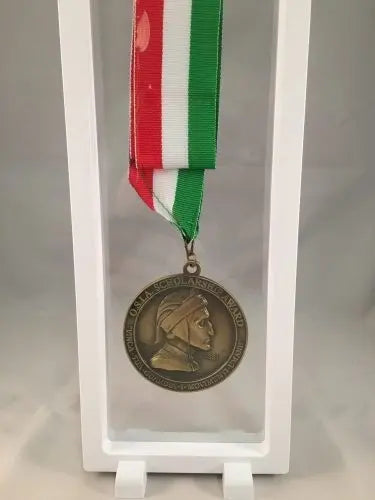
Anti-gravity displays are the latest addition to our unique offering at PinSource. Although there are a lot of ways to store pins and coins and medals, these devices offer a fun and different approach.
The displays suspend each item in a thin flexible plastic layer so it can be viewed and admired from each side. They come in a variety of difference sizes and option for showcasing: rectangle and square with different dimension options as well as square or circular ‘feet’ for the display to stand on. color options are; black or white and all have a film to suspend, over and protect each item.
The display offers a unique solution and we are pleased to be able to offer them to our customers as a fun and new option for display and storage. The possibilities are endless as they can hold metal, lapel pins, coins and more.
There are a lot of different ways to display your collections or collectable items and we are excited about his new product. We hope you will be too. There are a lot of different options on the market that offer display and storage but this is a unique and new design we think you’ll be interested in. Give us a call to learn more about pricing or specific. We would be happy to discuss options.
As a company we pride ourselves on not only the products we design and our customer service but first and foremost our employees. We think there is something to be said for longevity in a company and when the opportunity arises to celebrate those milestones, we take advantage. And, since we celebrated some wonderful milestones at our companies last month, we wanted to take this time to highlight two wonderful employees – Todd Harvey & Jennifer Lockwood – who celebrated milestones at SUI International companies. We caught up with both of them for a little Q&A about what makes the company unique and why they’ve stayed and committed to company as long as they have.
Because of countless millions of women who planned, organized, lectured, wrote, marched, petitioned, paraded, and broke new ground in every field imaginable, our world is irrevocably changed. Women and men in our generation, and the ones that will follow us, are living the legacy women’s rights won against staggering odds in a revolution achieved without violence. Needless to say these pioneers -or suffragettes- have much to be proud of in the legacy of the Women’s Rights Movement, and a great deal to celebrate on the anniversary of the founding of the Women’s Rights Movement.